Soil vs sand for leveling
Soil (screened topsoil or lawn soil) is better when dips are deeper, when you need fertility, or when pure sand would clash with heavy clay. Soil holds nutrients and microbial life; sand mostly provides structure and drainage.
Use soil-forward fills for:
- Depressions roughly 1–3 inches (in lifts)
- Bare spots you will overseed
- Yards that already drain poorly with too much sand history
Use sand-heavy mixes for very shallow smoothing on established turf.
Choose the right soil product
Look for screened topsoil without construction debris. “Lawn soil” or “garden mix” bags vary wildly—read the label. Ideal texture is loamy: not pure clay bricks, not pure peat that shrinks when dry.
Compost is excellent blended (often 20–30%), not dumped pure in deep layers that can stay wet and nitrogen-hungry.
Step-by-step
1. Diagnose depth and cause
Is the dip from settling, pet traffic, buried roots, or runoff? Fix irrigation leaks and downspout dumps before you fill forever-sinking holes.
2. Cut edges and remove dead thatch
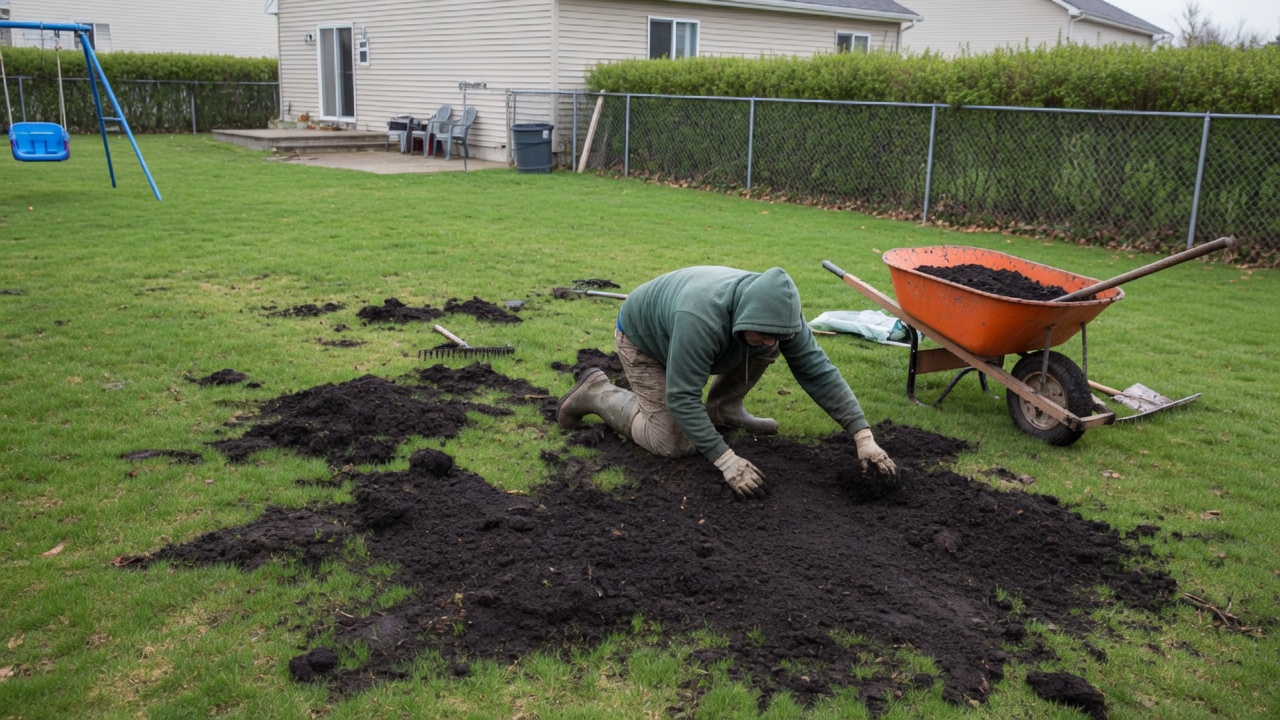
For deeper repairs, cut a clean edge, remove dead thatch, and scarify the base so new soil bonds to old ground.
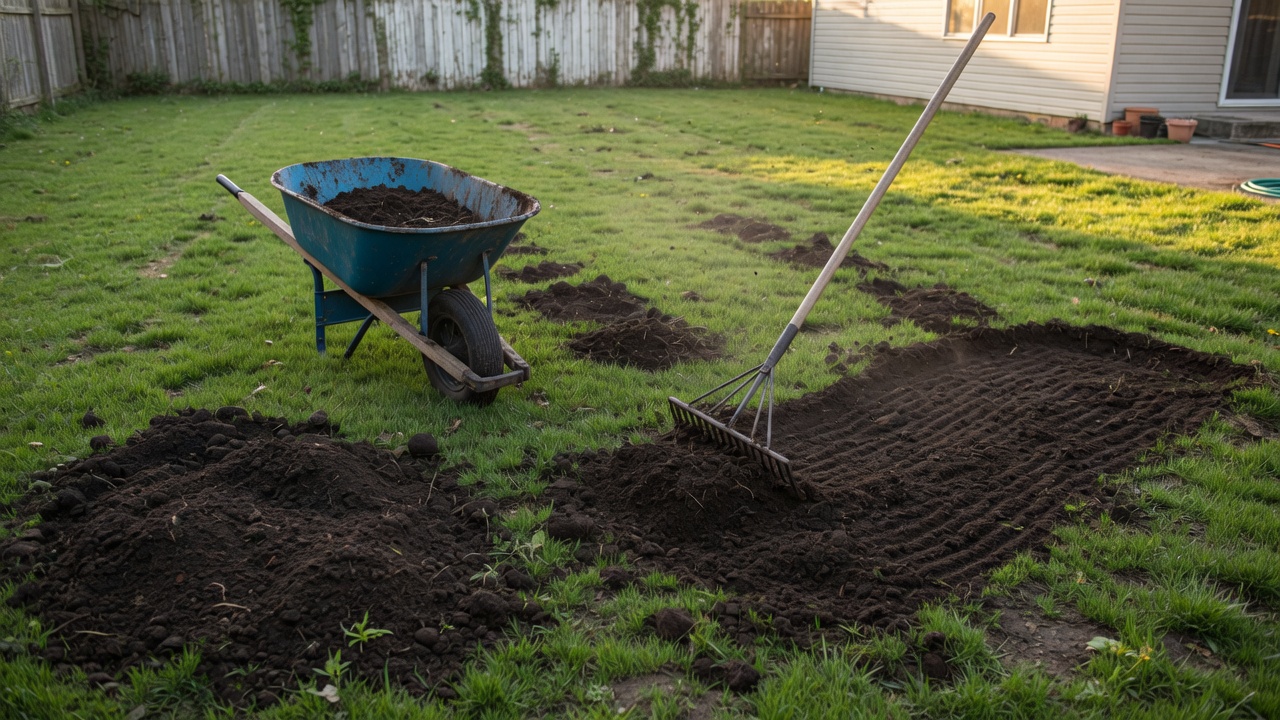
3. Fill in lifts
Add soil in 1-inch lifts, lightly firm (foot traffic or a tamper—not road compaction), then water. Deep single dumps settle for months and leave new dips.
4. Match final grade to surroundings
Sight across the lawn and toward hardscape. Keep a gentle fall away from the house (often ~1 inch in 4–8 feet near foundations, site-dependent).
5. Seed or sod the repair
Bare soil washes. Overseed with a mix suited to sun/shade, mulch lightly with straw or compost, and keep evenly moist until established.
6. Topdress the rest of the lawn lightly
Once big holes are gone, a thin sand–soil topdress + leveling rake cleans micro-bumps without burying crowns.
How much soil?
Same volume math as sand: sq ft × depth (inches) ÷ 324 ≈ cubic yards. Deeper repairs use more than people expect—measure twice.
Mistakes to avoid
- Unscreened “fill dirt” full of rocks and glass
- Pure compost caps that stay soggy
- Filling against siding above weep holes
- Skipping seed so rain carves channels
- Leveling only the middle while edges still dump water at the foundation
Climate notes
In freeze–thaw regions, avoid major fills late fall if grass cannot root. In hot summers, seed timing matters more than the fill itself—protect new seed from heat.
When soil work becomes a pro job
Laser grading, skid-steer work, French drains, and retaining edges are beyond weekend tools. If water enters the basement or the yard has multi-foot elevation change, get bids.
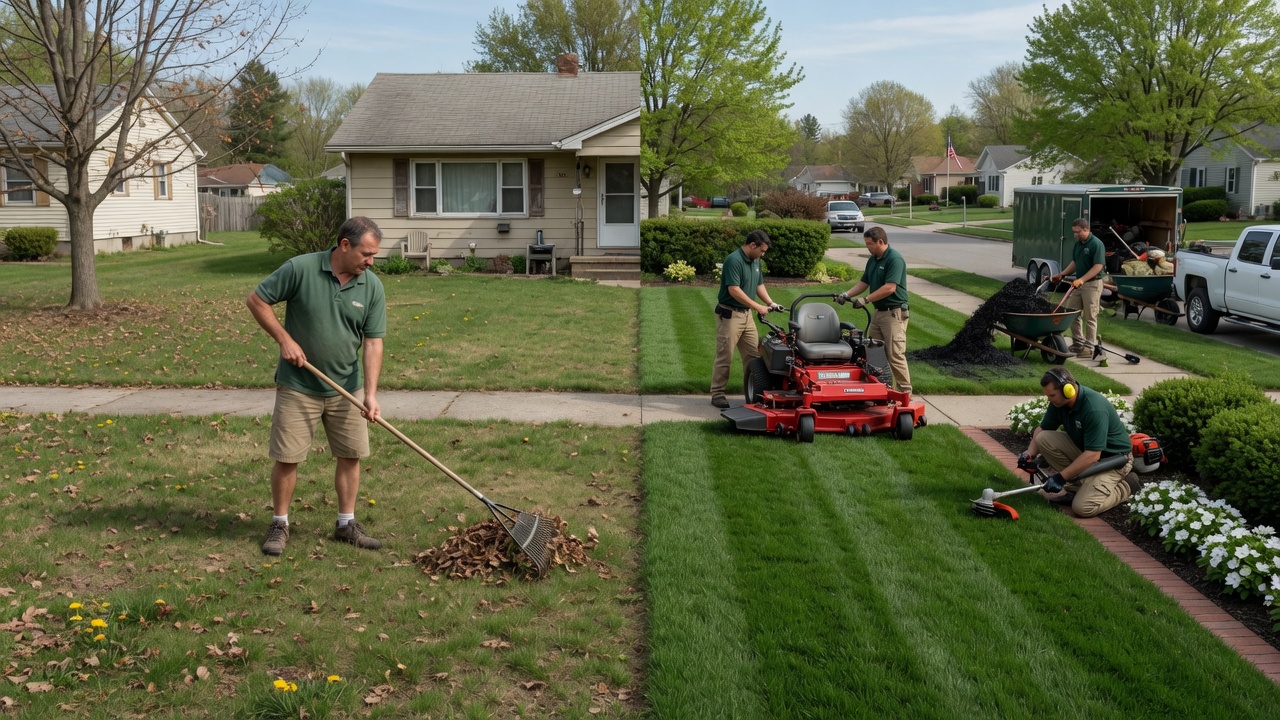
Browse local lawn leveling businesses or request free quotes when the repair is larger than a few bags.