Spring is revealing—and messy
Snow melt and rains expose tire ruts, pet paths, and frost heaves. Spring is a prime leveling season if you wait until the ground is workable and grass is waking up.
Pre-flight checks (before any fill)
- [ ] Soil is moist but not pudding—footprints should not fill with water
- [ ] Frost is out of the ground
- [ ] You know where irrigation heads and wires are
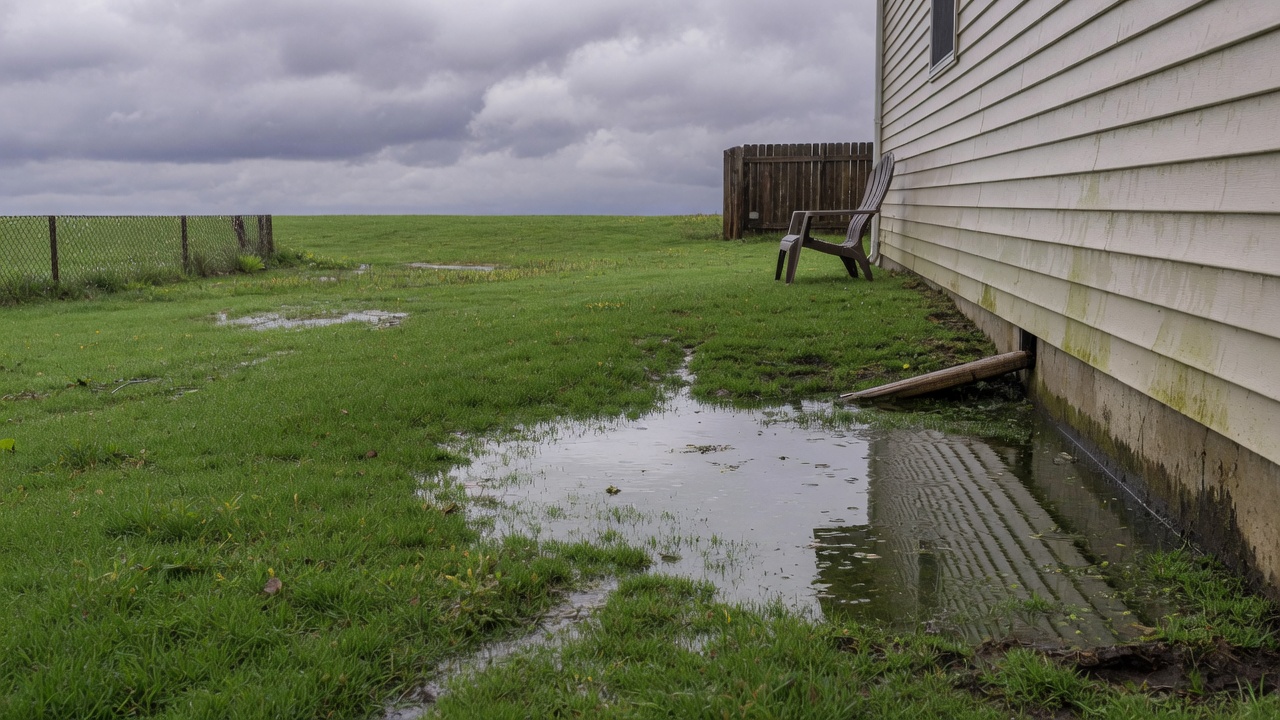
- [ ] Downspouts drain away from the house
- [ ] Mower is ready for a short cut
Week-by-week style plan
Week 1: Map and clean
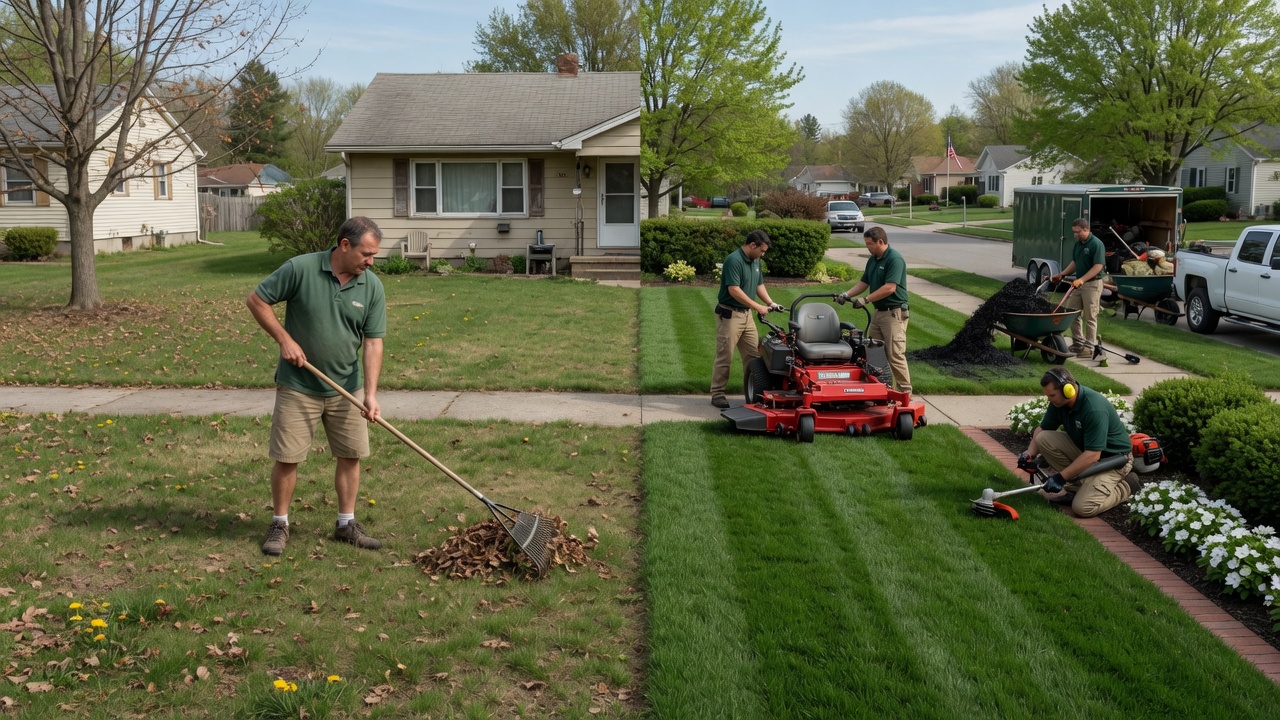
Rake debris, note every dip after a rain, photograph problem spots, and fix obvious downspout issues.
Week 2: Aerate if needed
On compacted or thatchy lawns, core aerate before topdress so material can drop into holes.
Week 3: Topdress thin
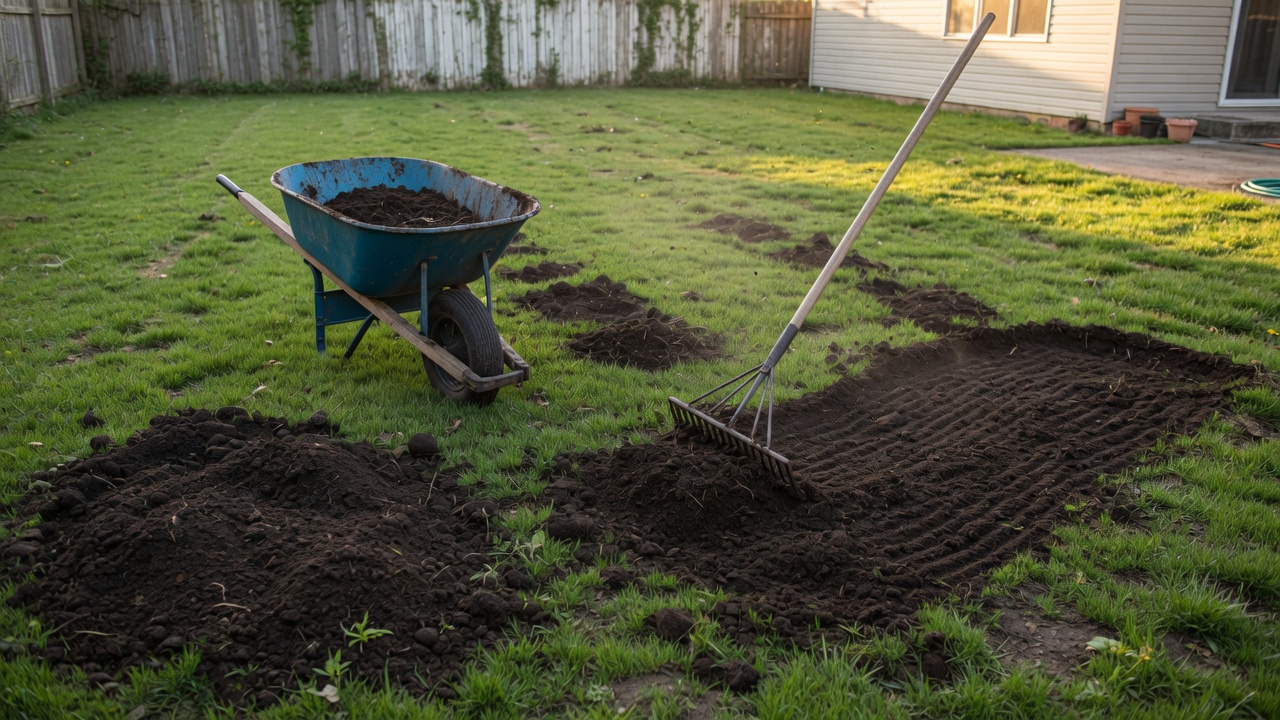
Apply a light sand–soil mix, leveling-rake smooth, water lightly. Stay under ½ inch on green turf.
Week 4: Seed thin areas
Match seed to sun/shade. Keep seedbed evenly moist. Skip if heat is already extreme for cool-season grass.
Ongoing: Mow high enough
Do not scalp new work. Raise mower slightly until repairs densify.
Material staging list
- Screened topsoil / mason sand / compost as needed
- Leveling rake
- Seed and starter fertilizer (if appropriate for your lawn program)
- Flags for low spots
- Hose with gentle nozzle
What to postpone until later spring or fall
- Major regrades while soil is saturated
- Deep fills that will settle all summer unseeded
- Projects that need permits or HOA review you have not started
Safety
Call before you dig if machine work is planned. Watch for bees in old rodent holes when filling.
When spring DIY is not enough
Standing water at the foundation, sinkholes, or multi-inch bowls need assessment beyond a checklist. Use drainage vs leveling and request free quotes.
Bookmark these guides
Find businesses near you on LawnLeveling.com when you want local help this season.