Topdressing is leveling’s best friend
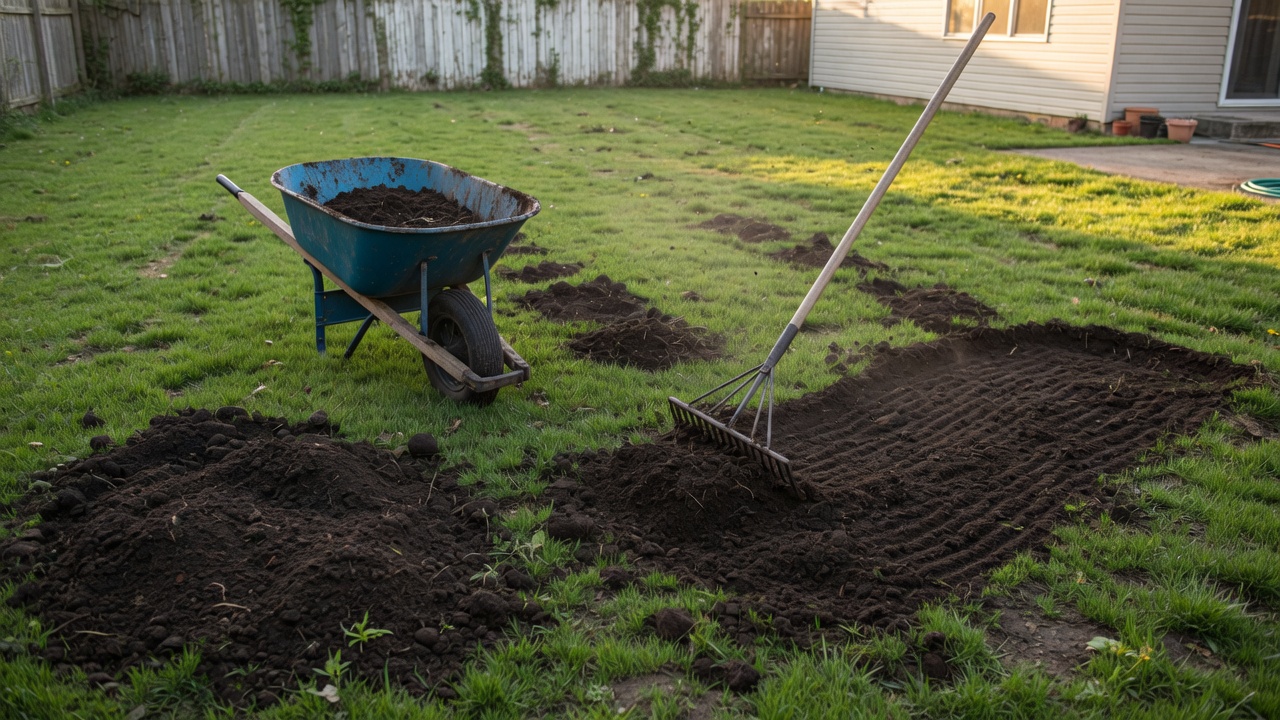
Topdressing means spreading a thin layer of material over living turf. Done right, it smooths minor unevenness, improves seed-to-soil contact, and can slowly improve root-zone texture.
Core recipes (by volume)
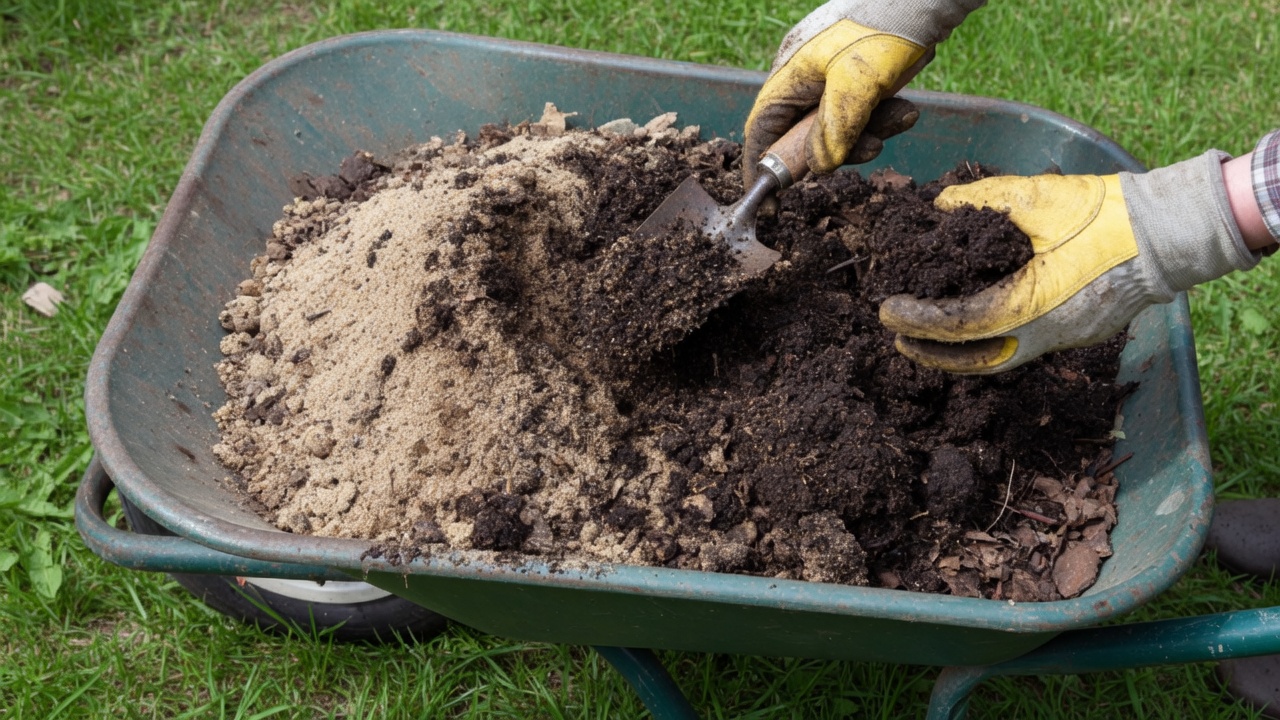
All-purpose home lawn mix
50% washed mason sand / 50% screened topsoil
Balanced for most shallow leveling. Easy to rake.
Fertility boost mix
40% sand / 40% topsoil / 20% mature compost
Good for thin, hungry lawns. Use compost that smells earthy, not sour.
Clay-soil caution mix
After aeration: light passes of 60% sand / 30% topsoil / 10% compost
Do not dump pure sand thickly onto sticky clay—it can create a perched water table at the interface.
Sandy soil mix
30% sand / 50% topsoil / 20% compost
Adds holding capacity so water and nutrients do not vanish.
How thin is thin?
Stay near ⅛–⅜ inch over green turf per application. You should still see most leaf blades. If the lawn looks painted brown, you applied too much—rake off excess.
Mixing tips
- Mix on a tarp or in a drum, not on the driveway where grit stains remain.
- Screen out rocks.
- Dampen slightly to cut dust.
- Make only what you will spread that day.
Application sequence
- Mow
- Aerate (optional but helpful)
- Broadcast mix
- Leveling rake
- Light water
- Overseed thin areas if needed
How often?
Many lawns benefit from one light topdress per year in a growth window. Problem yards may need two light passes instead of one heavy disaster.
What topdressing will not do
- Replace a regrade that moves inches of soil
- Fix broken drainage pipes
- Eliminate grubs or disease (treat those separately)
Safety and mess
Keep mix off vinyl siding and pool decks. Sweep hardscape the same day so grit does not etch or track indoors.
Keep learning
Sand types · Using a leveling rake · Soil fills for deeper dips
For larger jobs, browse pros or request quotes.