
Sand type matters more than the bag label suggests
Walk into a big-box store and you will see mason sand, play sand, all-purpose sand, and sometimes “lawn sand.” They are not interchangeable. Grain size, cleanliness, and salt content decide whether your lawn thrives or seals into a crust.
Quick comparison
| Type | Best for | Avoid if… | |------|----------|-----------| | Mason / concrete sand (washed, fine–medium) | Most DIY topdressing | You need heavy structure fill | | Sharp / coarse sand | Drainage blends | Used pure in thick layers on fine turf | | Play sand | Kids’ boxes, not lawns | Almost always for lawns—too fine | | Beach / dredged sand | Never for turf | Always—salt and contaminants | | Builder’s fill sand | Rough grade under hardscape | Unknown fines and debris on lawns |
Mason sand: the default DIY choice
Washed mason sand is fine enough to fall through the canopy and coarse enough not to turn into concrete-like mud when wet. Ask the yard for washed product without clay clumps.
Sharp sand and “horticultural” sand
Angular grains leave more pore space. Pros often blend sharp sand into root-zone mixes for sports turf. For a home lawn, use sharp sand as part of a mix, not a deep pure layer that stays abrasive and hungry for nutrients.
Why play sand fails
Play sand is screened for softness. Those ultra-fine particles pack, hold water, and can create a perched wet layer. Grass roots suffer.
Regional tips
- Clay soils: favor mixes with sand and compost/topsoil so you do not create a sharp interface that perches water.
- Already sandy soils: pure sand adds little nutrition; lean on compost-rich topdress.
- Freeze–thaw climates: thin layers only; thick sand lenses can heave oddly over winter.
Buying checklist
- Ask if it is washed and free of salt.
- Squeeze a damp handful—it should crumble, not smear like clay.
- Check for trash, asphalt bits, or oil smell.
- Calculate cubic yards before you rent a truck.
- Store covered so rain does not wash fines away.
Mixing ratios that work in practice
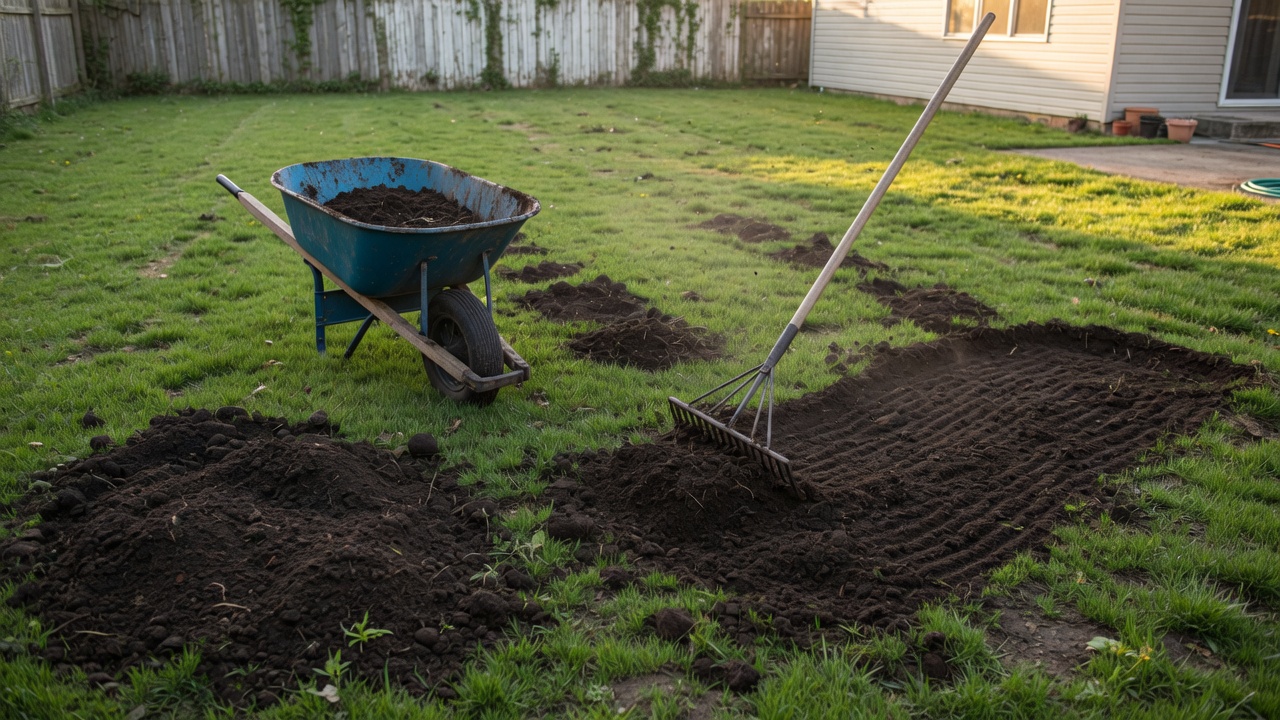
- Light leveling on healthy turf: 50% mason sand / 50% screened topsoil
- Organic boost on tired lawns: 40% sand / 40% topsoil / 20% compost
- Heavy clay (with care): thinner sand layers after aeration; do not “cap” clay with pure sand
Sand alone will not fix slope
If the whole side of the yard falls toward the foundation, you need grade change—soil moved, not a bag of sand on the surface. Sand topdressing is for surface smoothness, not civil engineering.
Related reading
See our guide on leveling with sand step-by-step and topdressing mix recipes. For deeper grade issues, find local listings or request quotes.